Posts

Showing posts with the label multimedia

A word on visuals: Using text in slides part II
Image
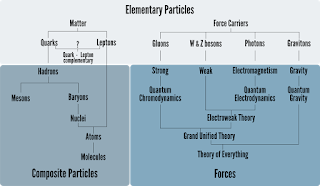
In part I I talked about the shape of the text in slides. In part II I want to address the content. There are two basic questions. One is, when is the use of words better than the use of pictures? And the other, how to effectively use words in pictures? Let me kick off with the diagram below that I found in Wikipedia and remixed. On question that putting the information shown here into a written form would take more time to process. This is the point that the director of the Data Visualization at the University of New Hampshire, Colin Ware, makes. According to Mr. Ware, hierarchical relationships are most effective presented in a structured diagram (Graphics 1, Text 0). Now take a look at the diagram below. It is called a flowchart, and it is used to graphical display an algorithm. In this case computing the factorial of n, n!. In case you wonder n! = 1 x 2 x ... x n. The pseudocode of this flowchart would be something like this:  read n f = 1, m = 1 mark: f = f*m if(...

Visual examples: Multimedia learning

Image
I'm helping a friend with the visuals of a lecture on Multimedia learning based on the book of Richard Mayer of the same name. I asked if I could use some of the material to post here, so here we go: 2 traditional views of the learning process. Information aquisition (IA) + knowledge construction (KC). IA is better explained by the empty vessel analogy: The brain is an empty vessel and information is poured into it. KC refers to the sense-making process of the information that is presented. Ideally, good multimedia leads to KC allowing the learner to remember and apply the learned material. Traditionally, in the design of multimedia, this 2 concepts clash. An example is extraneous processing overload. Extraneous process overload is likely to occur when the lesson contains attention-grabbing irrelevant material and/or when the lesson is designed in a confusing way.  Avoid redundancy, i.e., presenting multimedia material in spoken text, printed text and pictures is likely...